In 2022, the American Cancer Society National Lung Cancer Roundtable (ACS NLCRT) conducted market research to understand perceptions and barriers to lung cancer screening. The goals were to:
- Assess general awareness of lung cancer screening and its benefits.
- Understand attitudes, motivations, and barriers to getting screened.
- Identify messages and communication strategies that could motivate at-risk individuals to consider and seek low-dose computed tomography (LDCT) screening.
- Determine the most effective ways to deliver these messages.
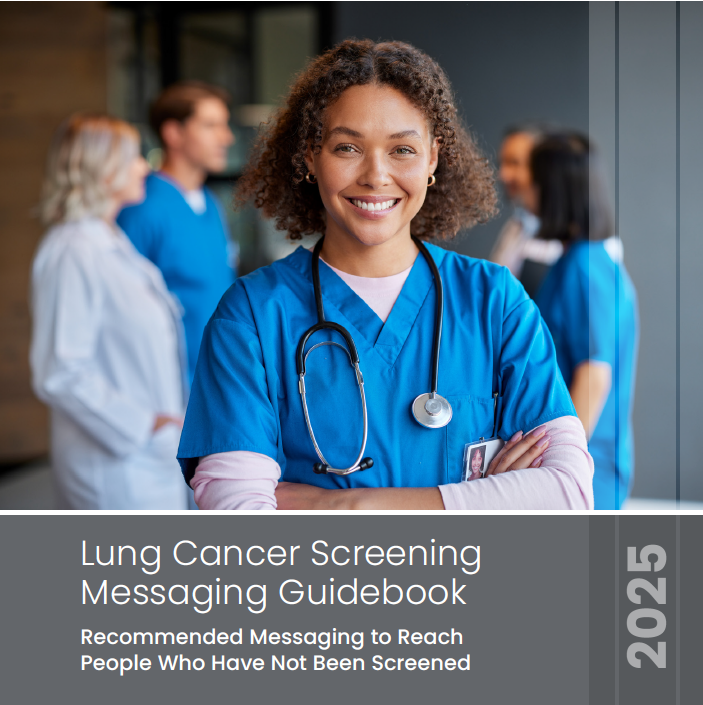
This guidebook shares those findings and provides practical tools for providers, clinic staff, and public health professionals to raise awareness, spark conversations, and motivate action. Partners can use these insights to strengthen communications campaigns and create resources that resonate with target audiences.
Why It Matters
Lung cancer is the leading cause of cancer death in the U.S., yet screening rates remain low as only 18% of eligible individuals reported screening in 2022. Early detection through LDCT saves lives, but many people are unaware of this option and their accessibility to it.
About the Research
The research was divided into two phases.
- Phase 1 assessed the attitudes and perceptions of the eligible population that had not been screened.
- Phase 2 assessed the effectiveness of various screening messages through a quantitative survey.
Key Insights
Research revealed four major barriers:
- Many people are not aware that a screening test exists that can reduce the risk of dying from lung cancer.
- Many people believe lung cancer screening is not covered by insurance.
- People who have quit smoking are less likely to realize they are at increased lung cancer risk.
- Some people who smoke blame themselves for their increased cancer risk and are less prone to action because they think nothing will actually reduce their lung cancer risk.
Explore More
Cancer Statistics Center
The ACS’ Cancer Statistics Center website gives the user an opportunity to explore, interact with, and share cancer statistics.
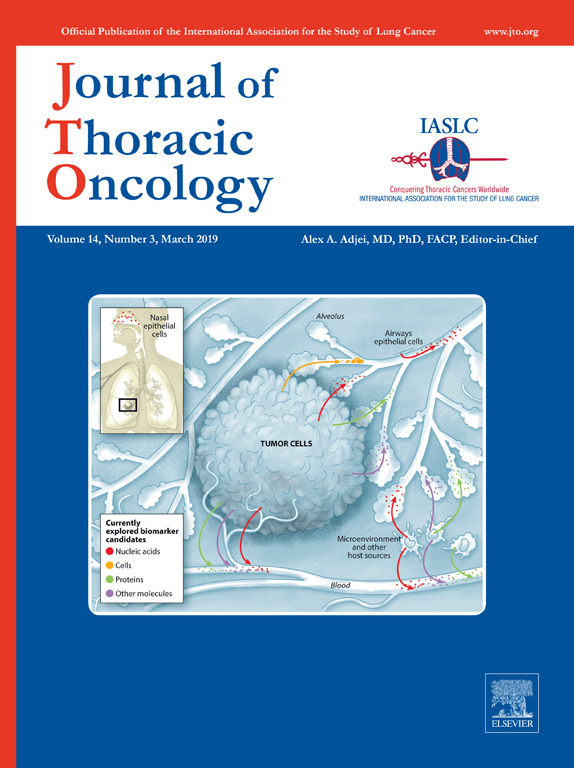
Updates Regarding Biomarker Testing For Non–Small Cell Lung Cancer: Considerations From The National Lung Cancer Roundtable
Updates Regarding Biomarker Testing For Non–Small Cell Lung Cancer: Considerations From The National Lung Cancer Roundtable
Accelerating Uptake of Lung Cancer Screening Summit Executive Summary
The American Cancer Society National Lung Cancer Roundtable (ACS NLCRT) held its inaugural summit on Accelerating Uptake of Lung Cancer Screening on July 19-20, 2022, in Washington, DC. Increasing lung cancer screening has long been a priority of the NLCRT and its members. The goal of the summit was to accelerate the uptake of lung cancer screening by creating a shared understanding of the current state of screening, identifying key challenges and barriers, and developing and prioritizing strategies to build a comprehensive framework that engages key partners with actionable recommendations.